
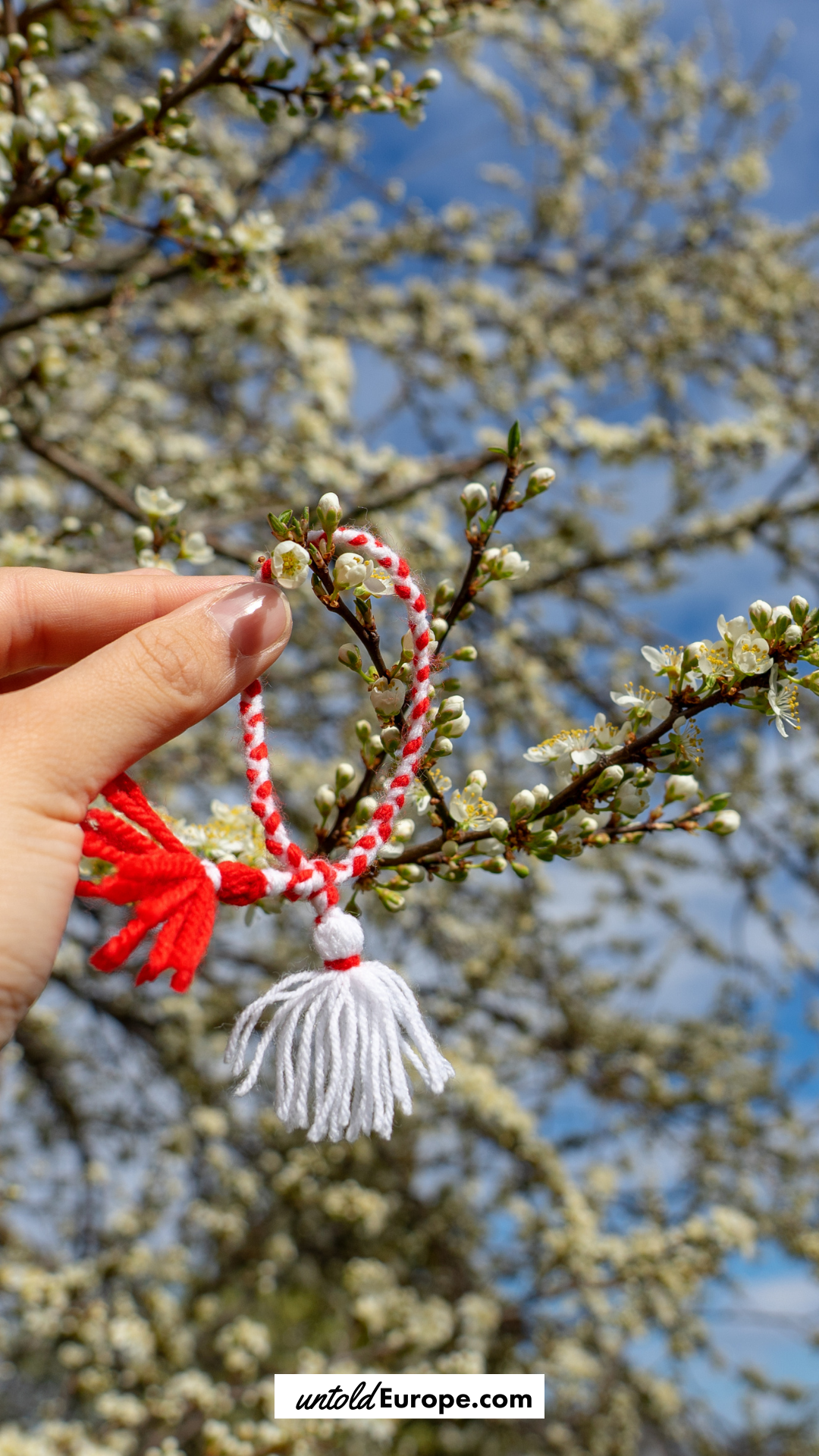
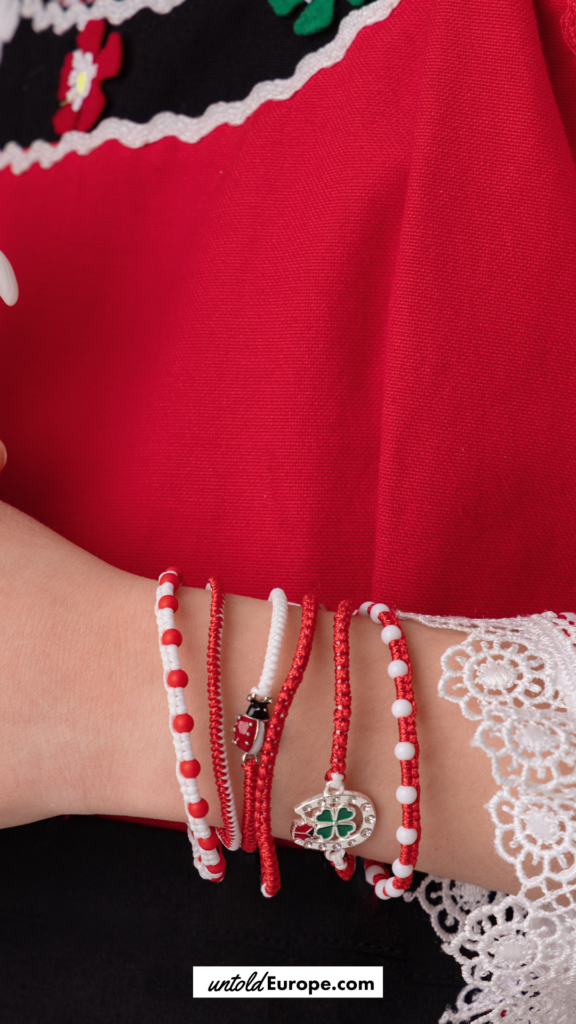
That little bracelet is called Martenitsa in Bulgaria, Mărțișor in Romania and Moldova, Martis in Greece, Martinka in North Macedonia, Verore in Albania.
If you are traveling around the Balkans around March 1st, you might get a little red and white band tied around your wrist. Some people even wear them on their clothes, like medals on a general. Kids have them. Grandmas have them. The woman at the coffee shop has three.
“Chestita Baba Marta!” It was just two threads — one red, one white — twisted together and looped into something delicate and cheerful. But the way it was given, with such warmth and intention, told me this was something worth understanding. That little bracelet is called Martenitsa in Bulgaria, Mărțișor in Romania and Moldova, Martis in Greece, Martinka in North Macedonia, Verore in Albania.
And once you learn what it means, you’ll never look at March 1st the same way again.
Baba Marta Is Coming — Better Be Ready In Bulgaria, the first day of March belongs to Baba Marta — Grandma March — a temperamental old woman from folklore whose moods literally shape the weather.
You’ll want to know what’s going on. Turns out, this is an ancient tradition, unique to the Balkan region, and absolutely celebrated across Bulgaria, Romania, Greece, Macedonia, and Albania. Same idea, slightly different names, completely different energy in each country — and all of it fascinating.
It Starts With a Grumpy Grandma
In Bulgaria, March 1st belongs to Baba Marta. That translates literally to Grandma March. She is a character from old folklore — moody, unpredictable, and apparently in full control of the weather. When she is happy, the sun shows up. When she is not, expect a surprise snowstorm. Bulgarians have been navigating her moods for centuries.
To mark her arrival, people exchange martenitsi — those red and white tassels, bracelets, or little twisted cords. You give them to people you care about. You wish them health, luck, and a good year ahead. The red thread stands for life and vitality. The white one is for purity and new beginnings. Together they are a small, wearable wish.
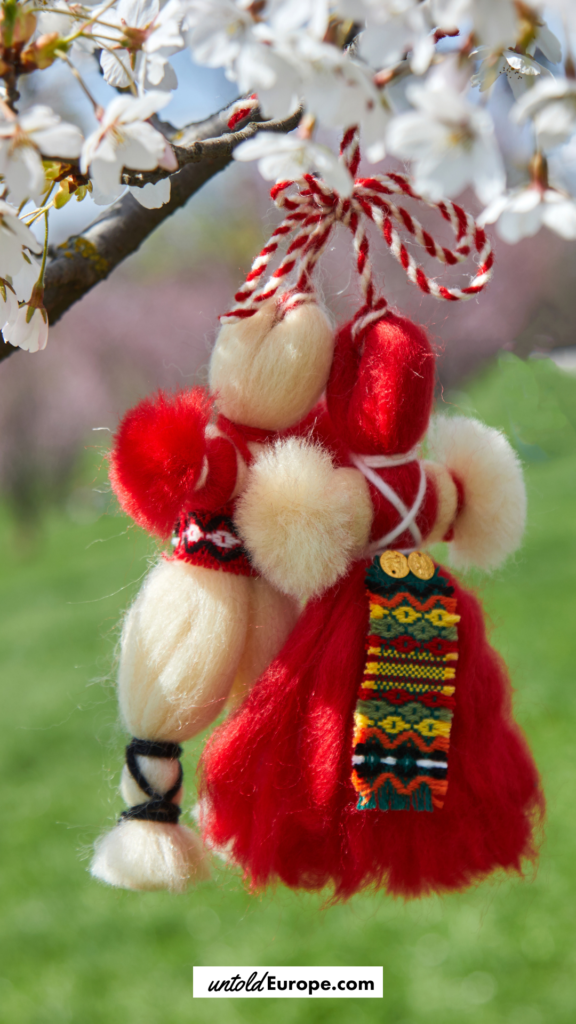
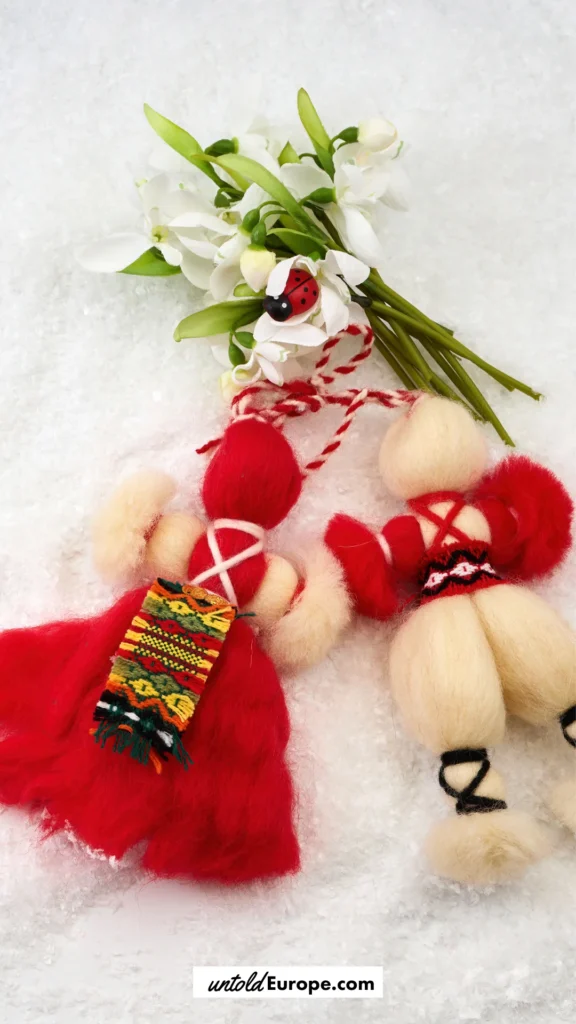
The classic version comes with two tiny dolls — Pizho, a white male figure, and Penda, a red female one — wrapped around each other. They are everywhere in early March. Market stalls, pharmacy counters, school bags. You cannot miss them.
It Also Gets a Little Crazy
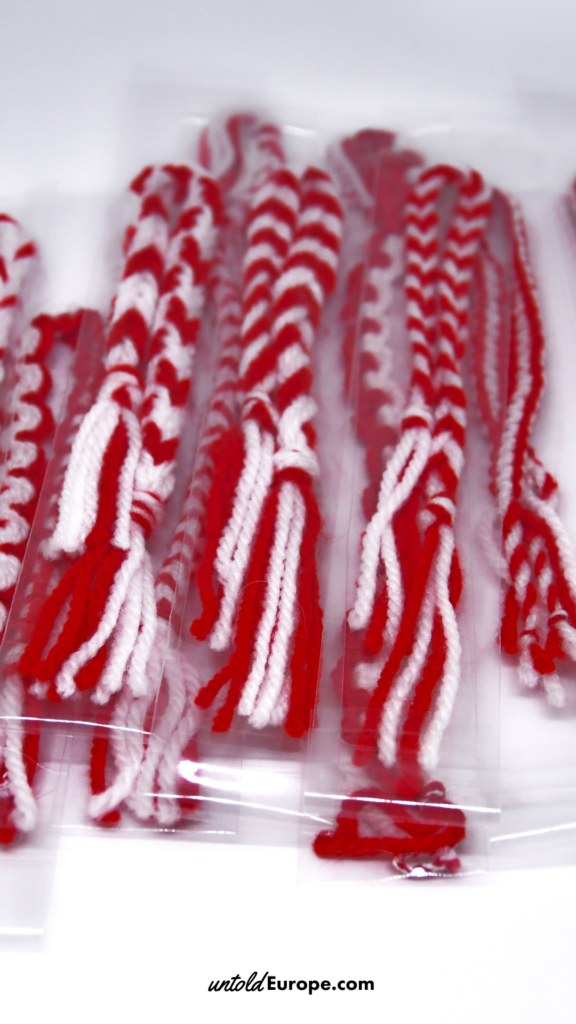
The story in Bulgaria gets even crazier. Martenitsi come in all shapes and sizes. Some are mass-produced in China. Some are authentic and handmade by someone’s grandmother. Some look like tiny works of art. Some look like a keychain you’d find at an airport gift shop.
People start selling them in February. You can pick one up at the market, sure, but you can also grab one at the supermarket right next to the yogurt. The tradition of a simple red and white band that someone used to twist together at home has been fully commercialized at this point.
Which is a little sad, honestly. But also very human. The meaning is still there for the people who carry it. You just have to look past the plastic packaging to find it.
You Have to Wait for a Stork to Take It Off
Here is the part that really got me. You do not just take the bracelet off whenever you feel like it. You wear it and you wait. You are looking for the first stork flying overhead, or the first tree that starts to blossom. That is your sign. Spring has officially arrived, and only then do you remove it.
But you do not throw it away. You tie it to a fruit tree. A little offering back to the earth, carrying a wish for a good harvest and a generous year.
It is a small ritual. But there is something genuinely moving about being asked to pay that kind of attention to the world around you. You are not just waiting for warm weather. You are watching for it.
UNESCO agreed this was worth preserving. The tradition is officially listed as Intangible Cultural Heritage.

Cross the Border and the Thread Keeps Going
This is what surprised me most. The tradition does not stop at Bulgaria’s border. It runs through the whole region, shape-shifting slightly as it goes.
In Romania, it is called Mărțișor. Same date, same red and white thread, but the style leans more toward jewelry. Think tiny pendants — hearts, flowers, little ladybugs. Traditionally men give them to women, though these days anyone exchanges them. Romanians often wear theirs for the entire month of March. Some historians trace the custom all the way back to the ancient Roman New Year, which used to begin on March 1st. Also UNESCO-listed.
In Moldova, it is nearly identical to Romania’s version. Same name, same charms, same spirit.
In Greece, they call it Martis. A red and white bracelet tied onto children’s wrists on March 1st to protect them from the strong spring sun. It comes off around Easter or when the first swallows appear. In some regions, people leave the bracelets on rose bushes so swallows can weave them into their nests. That detail alone is worth the trip.
In North Macedonia, it is called Martinka. Very close to the Bulgarian version — red and white threads worn for health and good luck, removed when spring makes itself known.
In Albania, the tradition shifts slightly. They call it Verore and celebrate it on March 14th as part of Summer Day. Same red and white bracelet, same idea of marking the seasonal change.
Why Does Everyone Have the Same Bracelet?
Because they all share the same ancient past.
This whole region was once connected through Thracian culture, Roman influence, and agricultural life that ran on the same seasonal rhythms. March 1st was a threshold moment — the edge between cold and warmth, between waiting and growing. A protective charm worn at that exact moment made complete sense to people whose lives depended on the land.
The red and white combination kept showing up across all of them. Colors of blood and purity, of life and hope. Here in the Balkans, that symbolism became something specific, local, and surprisingly durable across thousands of years.
What to Do If Someone Ties One Around Your Wrist
Say thank you. Mean it.
Then go for a walk and start paying attention. Look up. Watch the trees. Wait for the storks. When you finally spot what you are looking for, find a branch, tie your little red and white thread around it, and make a wish.
That is the whole tradition. That is Baba Marta. And it is one of the most quietly lovely things you will stumble into while traveling through this part of the world.
Have you ever come across a martenitsa or mărțișor on your travels? Drop it in the comments.
— safe travels & happy spring
