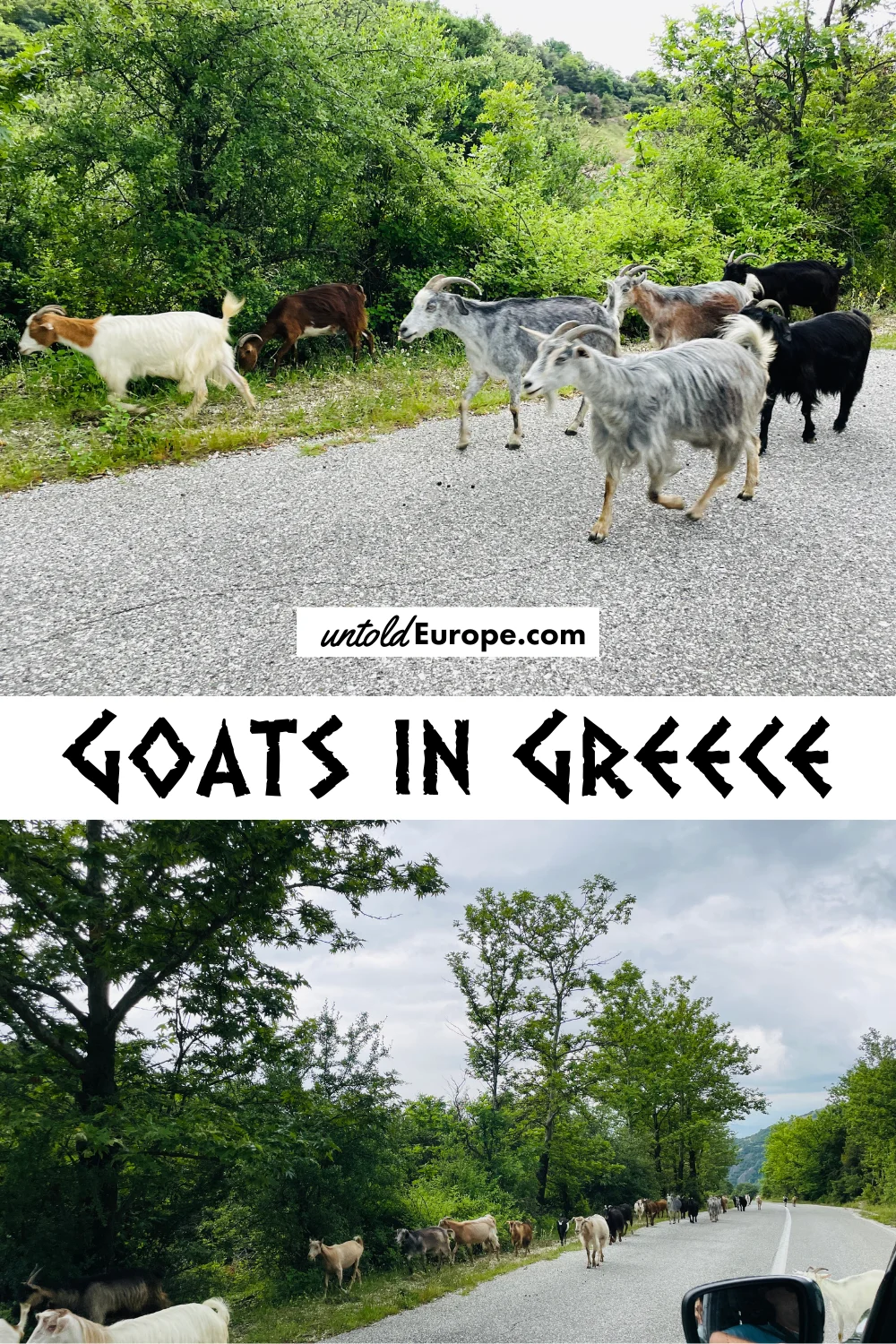
If you’ve spent any time in Greece – whether wandering through mountain villages, island-hopping in the Aegean, or just sitting at a taverna with a view – you’ve probably encountered a goat. Maybe it was perched on an impossible cliffside. Maybe it was blocking the road with an air of total indifference. Maybe it was just staring at you, chewing thoughtfully, like it knew something you didn’t.
Goats are part of the Greek life in ways that go far deeper than picturesque Instagram moments, we tourists take. They’re economic engines, mythological figures, ecological engineers, and occasional nuisances. Here’s why these four-legged climbers deserve more credit than they usually get.
A Country Built for Goats (or Vice Versa)
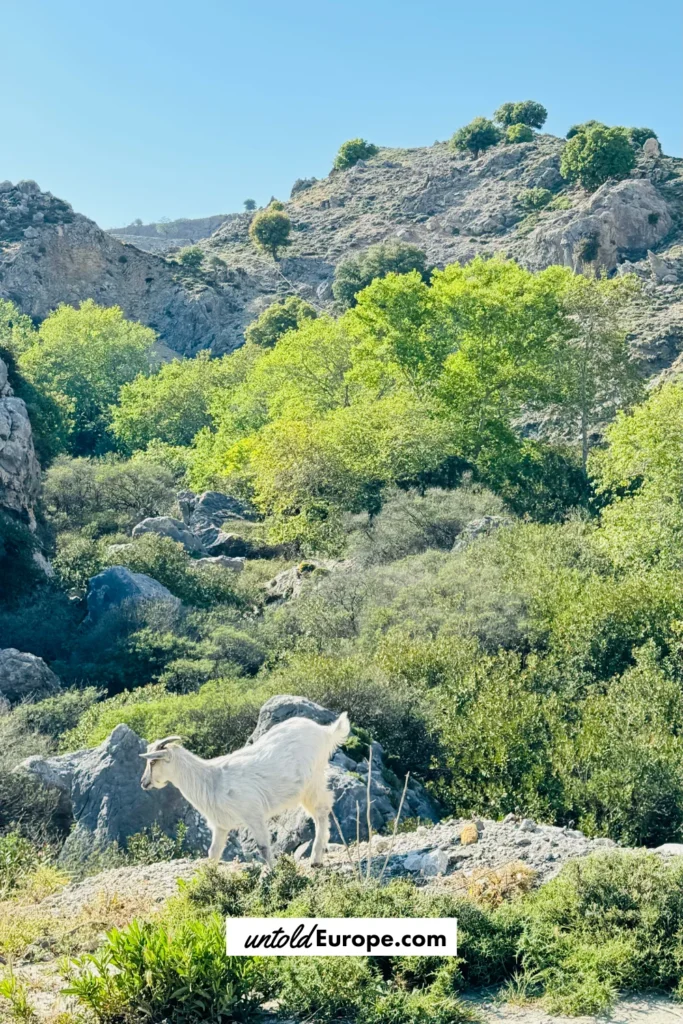
Greece has one of the highest goat populations per capita in Europe. We’re talking hundreds of thousands of goats scattered across islands, mountains, and peninsulas. And it makes perfect sense. Much of Greece is steep, rocky, and unsuitable for traditional agriculture. Goats, though? They thrive there. They’re nature’s parkour experts, casually scaling terrain that would make a hiker think twice.
This isn’t just charming – it’s practical. Goats turn otherwise useless land into productivity. They graze on shrubs and wild grasses that grow in thin, rocky soil, converting it into milk, meat, and cheese. In a country where arable land is scarce, goats are a strategic asset.
The Taste of Greece (Literally)
If you’ve ever enjoyed authentic Greek feta, you’ve tasted the work of goats. While traditional feta is made primarily from sheep’s milk, Greek law allows up to 30% goat’s milk in the blend. That goat contribution? It adds a subtle tang and complexity that makes Greek feta distinct from imitators produced elsewhere.
Beyond feta, goat’s milk is used to make a variety of cheeses across different regions – graviera, myzithra, manouri and countless local varieties that rarely leave the village where they’re made. And then there’s the meat. Roasted goat is a thing in the Greek food culture.
Mythology’s Favorite Nursemaid
Greek goats aren’t just practical – they’re legendary. In mythology, the goat Amalthea nursed the infant Zeus when he was hidden from his father Cronus on Crete. According to the myth, one of her horns broke off and became the cornucopia, the horn of plenty, an eternal symbol of abundance and nourishment.
Not a bad legacy for a goat.
The Soundtrack of the Countryside
If you’ve hiked in rural Greece or stayed in a mountain village, you’ve heard it: the rhythmic clanking of goat bells echoing across the hills. It’s not just atmosphere. Those bells serve a real purpose, helping shepherds keep track of their animals across vast, rugged terrain. Each herd often has its own recognizable sound pattern – a kind of acoustic signature.
It’s a sound that’s been part of the Greek landscape for millennia, a living connection to pastoral traditions that predate modern Greece by thousands of years.
Island Goats: Fearless and Hungry
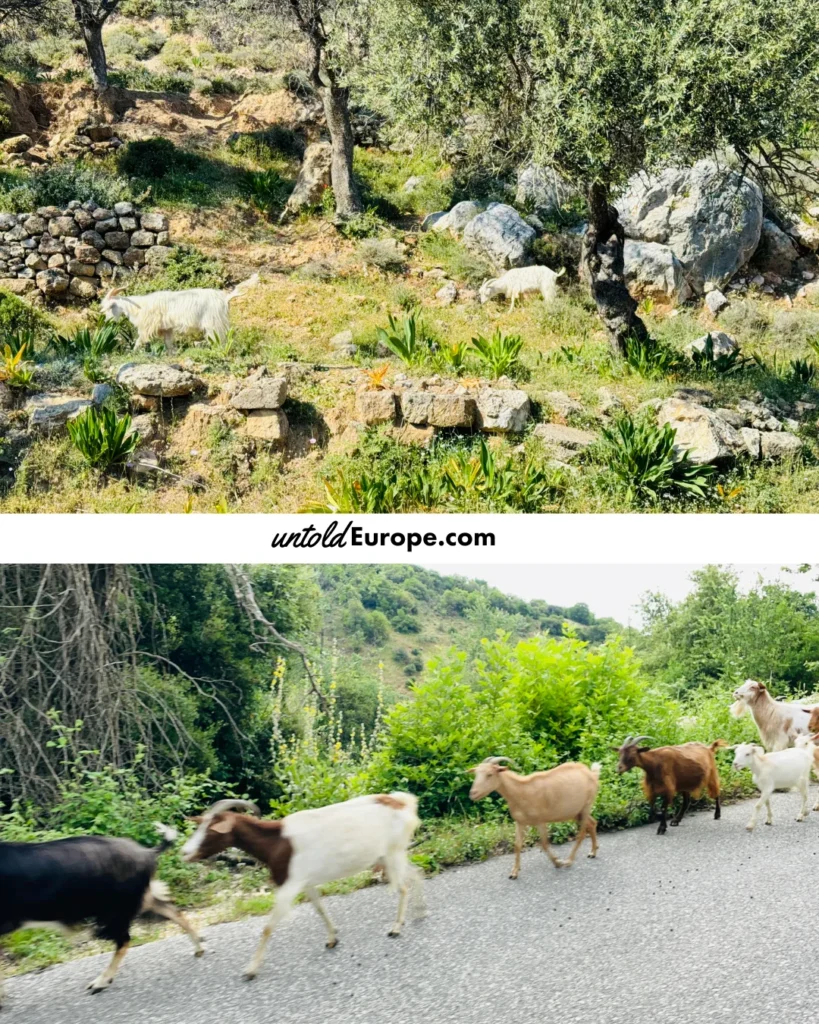
On many Greek islands like Rhodes, goats roam semi-wild, and they have a reputation. They’ll eat almost anything – shrubs, wildflowers, dry grass, your picnic, your laundry if you’re not careful. They’re fearless, curious, and occasionally irritating. But they’re also part of what makes the islands feel wild and alive.
And then there’s the kri-kri, or agrimi – a wild goat found only in Crete, particularly in the Samaria Gorge and the White Mountains. Unlike their domesticated cousins, kri-kri are shy, agile, and protected by law. They’re considered a national treasure and a symbol of Crete’s rugged independence.
More Than Just Scenic
It’s easy to romanticize goats as part of the Greek “aesthetic” – the rustic charm, the pastoral vibe, the postcard-perfect image of a goat on a cliffside at sunset. And sure, they’re photogenic. But they’re also working animals in a working landscape. They support rural economies, preserve traditional foodways, and make productive use of land that might otherwise sit idle.
They’re a reminder that Greece, for all its ancient history and tourist appeal, is still a place where people live close to the land, where old rhythms persist, and where a goat on the side of the road isn’t a novelty – it’s just Tuesday.
So next time you see one, maybe give it a nod. It’s doing more than you think.
